
Type 1 diabetes is caused by autoimmune destruction of insulin producing beta cells, predominantly affecting children and young adults.
It is one of the most common chronic conditions of childhood and adolescence, affecting about 1 in 700 to 1000 people.
Despite advances in scientific knowledge, more than one-third people with type 1 diabetes are inadequately managed and develop preventable complications like kidney failure, blindness and foot problems very early in life, impacting their life span.
Treatment is a taxing regimen of daily insulin therapy, blood glucose self-monitoring, controlling and calculating carbohydrate intake and matching insulin to carbohydrate, together with careful exercise management.
It is a huge economic burden on the family especially in our country where about 80% payment is out-of-pocket.
Managing their disease is a constant task for people with type 1 diabetes, and most daily management occurs without the involvement of health care professionals. Most people with type 1 diabetes do not have even the basic level of knowledge about the disease due to inadequate access to information on managing type 1 diabetes. Very few people have high competency in managing type 1 diabetes due to lack of structured education.
People with type 1 diabetes often experience psycho social problems such as anxiety and diabetes distress. People with type 1 diabetes experience discrimination at schools, colleges, workplaces and in society.
SAKSHAM (A Type 1 diabetes welfare society) aims at saving and improving lives of people with type 1 diabetes.
The broad aims include
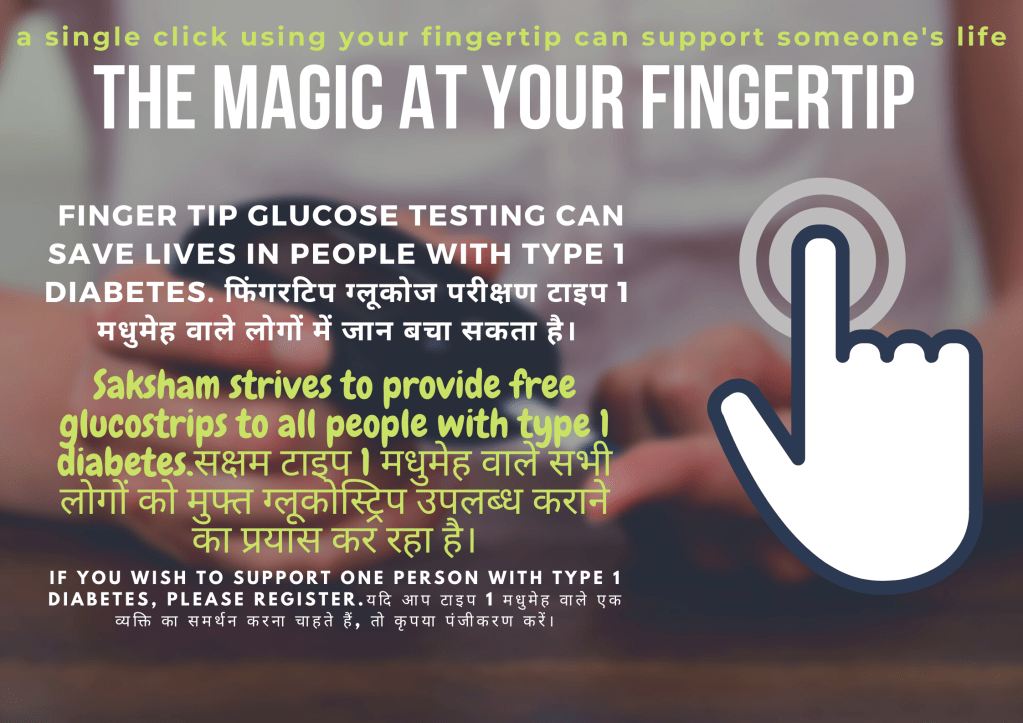
- Financial Support– Provision of insulin and glucostrips, regular investigations and specialist consultations.
- Structured Education program to people with type 1 diabetes with clear content, structure, curriculum and underlying philosophy.
- Peer Support Group to help in managing diabetes in day-to-day life, experience sharing and providing psychosocial support.
- Advocacy to spread awareness about type 1 diabetes in society in general, in schools and workplaces specifically.
- Research and technology development aligned to the needs of people of type 1 diabetes.

 Saksham